EUROPEAN NIGHT
Tottenham Need More Than A Europa Night
There is a particular kind of Tottenham grievance that arrives whenever the club plays well away from home. We see the colours, the noise, the scraps of possession and the collective belief, then we compare it with the version of ourselves that seems to become almost unbearably ordinary in the same league and on the same strange kickoff schedules. The answer is not to sneer at Europe, nor to pretend that a European night can repair everything. It is to say that Tottenham should be demanding more of this team than one luminous occasion away from home. De Zerbi has given us a shape worth trusting, but shape is only the beginning. The next stage is turning flashes of coherence into a repeatable way of winning.

One Good Night Cannot Settle The Season
I want Tottenham to win in Europe. I want the players to feel the importance of the competition, to travel properly, to meet a crowd that has not been softened by the usual complaints, and to return with an experience that makes the next home match feel less anxious. None of that makes me a neutral observer of the club. I am a Tottenham fan, proud enough to enjoy the possibility and aggrieved enough to ask what happens when the spotlight moves elsewhere.
The problem with a European night is that it can become a convenient escape from domestic reality. We discuss the away end, the tactics, the atmosphere and the rare feeling of inevitability, while the Premier League version of this team continues to be judged against evidence that cannot be wished away. We need wins at home. We need matches in which the crowd is still backing the side after a difficult passage, not merely celebrating a good first half before checking the phone. We need the team to show that the work De Zerbi has done travels beyond one venue and one evening.
There is also a risk of turning Europe into a side show. The Premier League is where the club's identity is tested most regularly, where the players spend the greatest share of their time and where supporters judge whether progress is genuine. A European run can enrich a season, but it cannot be used as a shield against domestic shortcomings. If the league version remains inconsistent, then the honest conclusion is not that Europe is beneath us. It is that we have not yet made the whole club better.
Tottenham's task, then, is simple to state and difficult to execute: win the next important match, then win the one after that. Not because every game must be perfect, but because a modern team is defined by its response to imperfection. A side that can recover from a poor moment, protect a lead or impose itself after conceding has understood something that cannot be taught with a single tactical diagram.
The Shape Is Real, But The Standard Is Not Yet
De Zerbi has not arrived with a blank sheet. He has inherited a squad accustomed to change, a dressing room that has heard plenty of explanations and a public that has become expert at identifying false dawns. The useful thing about the current Tottenham shape is that it is recognisable. There is a desire to play forward, to find technical players between the lines and to make the movement of the whole side feel connected to the movement of one player.
That matters. Tactics are not merely about the fashionable nouns attached to them, and a coach should be judged partly on whether players understand their responsibilities. The question now is whether that understanding can survive the less flattering conditions of a league campaign. European opposition may prepare us for a particular test, but the league contains opponents who change the temperature every week. A system that works when the ball is at our feet is only half a system. The other half begins when the opposition has it.
We should be careful, too, with the language of progress. Progress is not the same as improvement, and improvement is not the same as a finish in the top half. The evidence should be found in repeatable details: the distance covered by players who have lost the ball, the number of clearances made from a position that gives the team time, the courage to circulate possession rather than surrender it, and the ability to make a difficult away game feel manageable. These are unglamorous indicators, but they are the ones that reveal whether a team is becoming stronger.
Tottenham should not be content with the appearance of a new identity. Identity is what people call the photograph when the action has stopped. The club needs the harder, less photogenic work of making opponents uncomfortable for longer periods. If De Zerbi's side can do that at home, Europe will become an extension of the season rather than a parallel universe.
What The Away End Can Teach Us
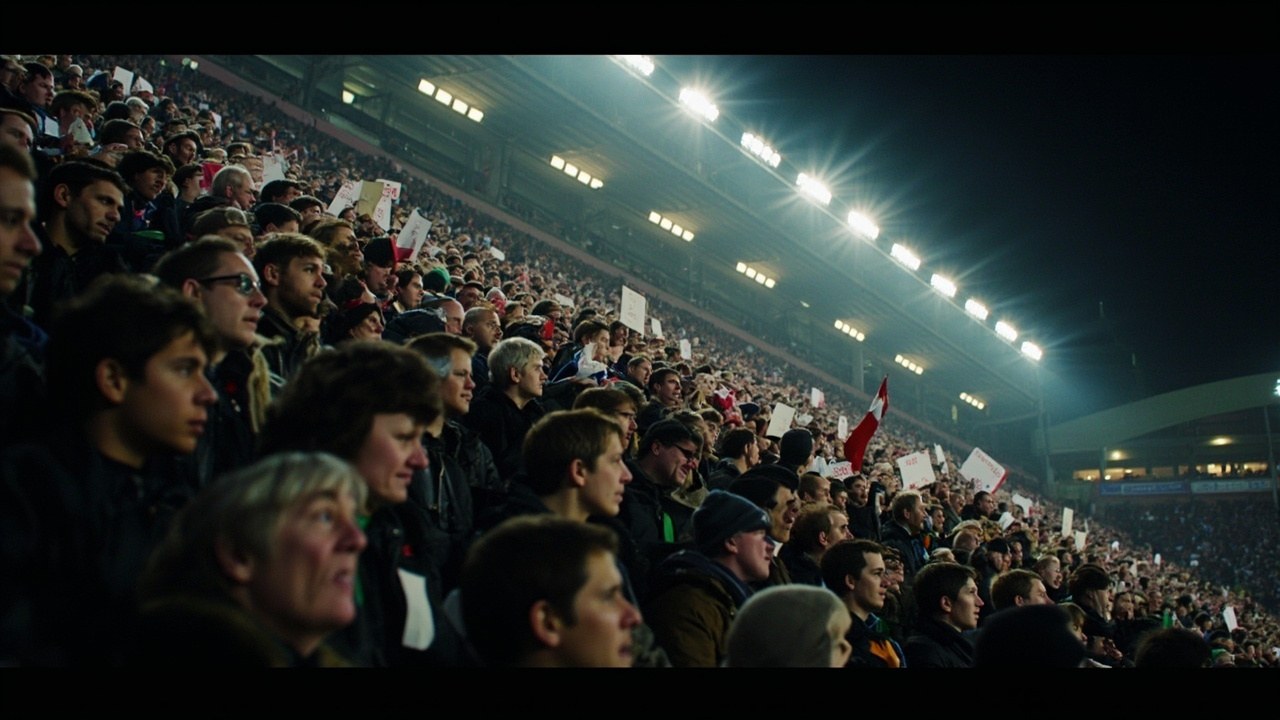
The best part of a European night away from home is not necessarily the result. It is the reminder that Tottenham supporters can organise, sing and believe in a way that transforms the atmosphere around the players. That is a resource, and resources should be spent rather than merely admired. The players can feel a different relationship with the crowd when the noise is close, when the songs arrive together and when the stands feel as though they are part of the team's effort.
But there is a lesson here for the home season as well. The away end does not manufacture unity out of nowhere. It reflects a club that has made people want to turn up, follow the details and believe that their presence matters. If we want a more forceful home atmosphere, the answer cannot be to blame the crowd for becoming tired or distracted. We can make matchday a more deliberate expression of club identity, and the team can give the supporters something worth lifting.
That is a two way exchange. Supporters ask for commitment, application and courage. Players ask for patience, warmth and a sense that the stadium is working with them. The ideal is not a choreographed noise but a genuine recognition of one another. A side that wins a European away game has shown what can happen when that relationship is strong. Now the task is to make the bond visible in the league, where the stakes are familiar and the irritation of a misplaced pass can be heard from the upper tier.
We should not romanticise every European occasion, either. Some away environments are hostile, some matches are flat, and no amount of romanticism can substitute for a performance. Yet the away night can be a useful test of whether this Tottenham side is beginning to carry its identity with it. The answer should be measured in what happens afterwards, not in the first wave of celebration.
The Domestic Work Still Waits
There will be days when the league table looks kinder than the performances deserved, and days when the performances are better than the table suggests. Neither is unusual. What matters is the accumulation of evidence, and we should be suspicious of arguments that rely on a single result, a single decision or a single dramatic passage of play. Tottenham's season cannot be rescued by one European win, nor should it be dismissed by one disappointing afternoon.
The domestic priorities are obvious even when they are not exciting to write down. We need fewer moments of avoidable retreat, more control when opponents press, and an attacking identity that does not disappear when the first clean chance passes. We need leadership on the pitch, not only leadership in the newspapers. We need supporters to feel that the team has a method for every type of game.
That is why the current shape is encouraging but not conclusive. A new coach can reveal a promising first movement. The next stage is repetition under pressure, when fatigue has reduced the quality of the training ground and the opposition has studied the pattern. The strongest De Zerbi sides have been recognisable because their players did not need constant permission to compete. That is the standard now.
I will judge this Tottenham side on its capacity to make a good day feel normal. Normal does not mean dull. It means that when the team wins away in Europe, the same confidence appears at home, that when the opening spell is poor, there is a visible method for changing the match, and that when the opposition has the momentum, nobody spends half an hour waiting for a miracle.
We can be proud of the work without pretending it is finished. The proud part is that there is something here worth backing. The aggrieved part is that supporters should not have to build a season around isolated evenings of beauty while the rest of the week asks for basic evidence of progress.
One More Piece Of The Puzzle
The most important thing to preserve is not a formation on paper. It is the idea that Tottenham can be proactive without being reckless, technical without becoming detached from the contest, and adventurous without treating the defensive responsibility as somebody else's department. Those qualities can coexist, but only if every player understands the cost and benefit of his choice.
That is the challenge facing De Zerbi and the squad. The players have shown flashes of the side we want, particularly when the ball moves quickly and the space between the lines is occupied by someone brave enough to receive. The next task is to make those flashes dependable. The manager's job is to create the conditions for that repeatability; the players' job is to accept responsibility for it once the conditions are there.
European football will provide tests, and the club should embrace them. But the decisive test will still be the next league match in front of our own supporters. Not because home games are inherently more important, but because they are the clearest test of whether the team has learned to live with its own standards.
Tottenham do not need a European night to prove that a good idea exists. We need the idea to become routine. If they can win in Europe and then turn that same conviction into domestic points, the night will be remembered as the beginning of something rather than the entire story. If not, it will remain a bright interruption in a season still waiting to be made.
For now, the feeling is neither despair nor celebration. It is the hopeful irritation of a team that has shown us what it might become and now has to do the less glamorous work of becoming it. We will be there, as we always are, demanding the next part of the answer.