THE PATTERN
Tottenham’s October Proof Points To De Zerbi
There was a time when every Tottenham defeat could be explained away by the next thing. The schedule was difficult. The referee was poor. The squad was young. The weather was unreasonable. We were, inevitably, a little unlucky. This season, Roberto De Zerbi has made that excuse increasingly difficult to use, and that is exactly why the noise remains so loud. I want to look beyond the headline results and beyond the usual panic that follows every wobble. The evidence of the past few weeks points to a team that understands how it wants to play, which players give it strength and where its weaknesses remain. We are not watching a revolution in progress. We are watching a structure taking hold. Tottenham still have work to do. Of course they do. The Premier League does not reward tidy progress with a trophy, and nobody associated with this club would accept a mid table position as the destination. But after the irritation of recent seasons, there is something more valuable than a promising mood: there is a repeatable way of winning.
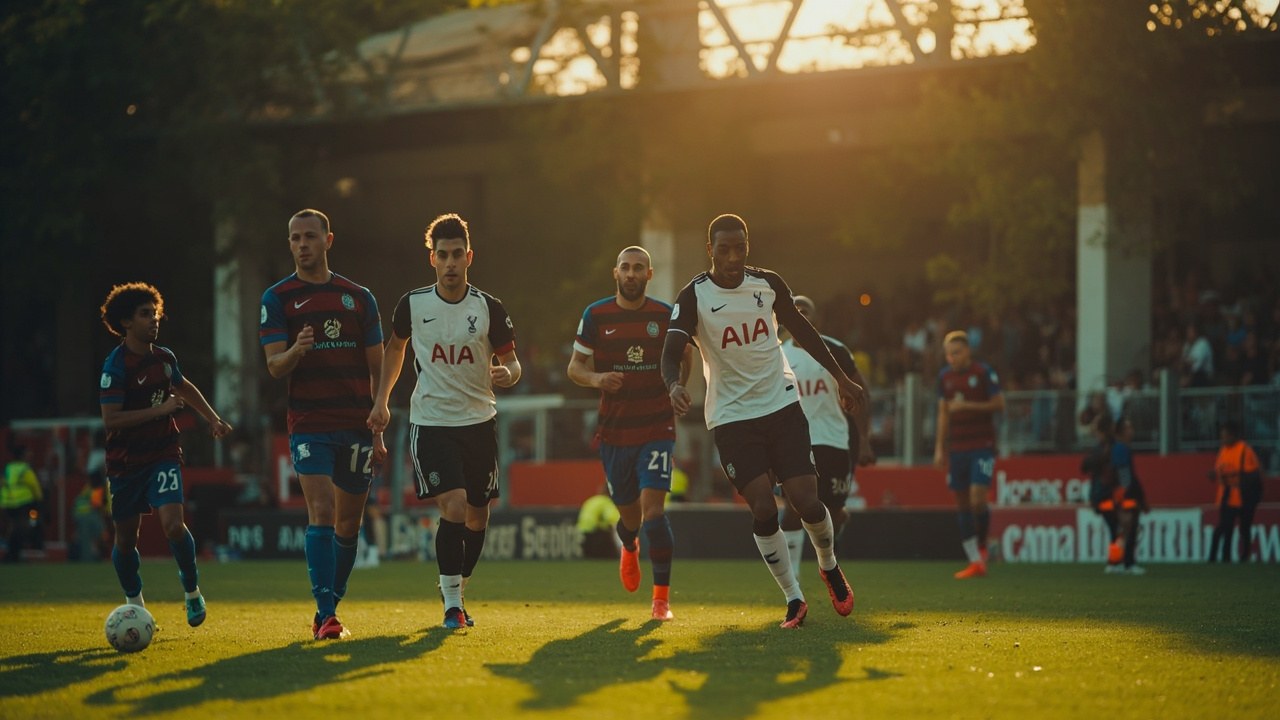

The results have stopped feeling accidental
The first thing to say is that the recent results have been good enough to change the conversation, not simply add another optimistic paragraph to it. Tottenham have found a way to turn matches that could have drifted into frustration into points, and they have done so with a degree of consistency that demands attention.
That does not mean every performance has been perfect. It does not mean the defensive line will suddenly become impenetrable, or that the attacking group will erase its weaknesses whenever we need it. What it means is that the team now looks prepared for particular problems. When opponents press, there is a route through the middle. When the first attacking move fails, there is often a second. When the match becomes uncomfortable, the response is not simply to retreat and hope.
De Zerbi has supplied something Spurs have lacked in too many recent seasons: visible intention. We know what the team is trying to do. We know who carries the ball, who attacks space and who is expected to make the next decision. This sounds obvious, but it is not a small achievement. A football club can have talented players, a modern training ground and an expensive recruitment department without having any of those things point in the same direction.
The October evidence should be treated as proof, then, but not as a finished argument. The proof is that De Zerbi’s work is producing outcomes and visible relationships on the pitch. The unfinished part is translating that into sustained success against the strongest sides in the league.
My concern is not that we have become a different club overnight. My concern is that we may still be judged as if we are the old club whenever a familiar bad habit appears. One misplaced pass becomes evidence of incompetence. One dropped point becomes proof that nothing has changed. We should be proud of the progress while remaining honest about the distance still to travel.
De Zerbi has made the shape readable
There is a difference between a tactical identity and a tactical fashion. A fashion can be copied for one afternoon. An identity survives a difficult evening because the players have internalised the same responsibilities.
Under De Zerbi, Tottenham’s shape has become increasingly readable. The team has shown a willingness to build through coordinated movement rather than simply sending the ball forward whenever possession is secured. The full backs have roles that extend beyond covering enormous areas. The central players are being asked to connect the defensive and attacking phases. The forwards have a clearer idea of where to move the ball and how to press the next space.
This is where the comparison with Brighton is useful, but only as a starting point. De Zerbi did not bring a frozen diagram from the south coast. He arrived with principles, then allowed the players in front of him to express those principles through their own qualities. Tottenham are not a laboratory experiment. They are a football team with enough character to make the instructions live.
We should also resist the urge to describe every successful passage as if it were a training ground pattern. Top football is messy. Players improvise. A simple pass can be the correct response to pressure, while a complicated sequence can fail because one opponent has read it. The important point is that there is a shared understanding of what the team is trying to achieve.
That understanding is why the same group can look settled even when the match changes. We have seen the ability to control territory, to accelerate through pressure and to recover when the contest tilts. We have also seen moments in which the structure is threatened. The difference now is that a bad moment no longer automatically becomes an entire afternoon of uncertainty.
For supporters, this creates a more enjoyable kind of anxiety. We are no longer waiting for a definitive tactical answer. We can see the answer taking shape.
The players are showing who the team really is
Systems are only as convincing as the people using them, and Tottenham’s recent evidence has been important because it has clarified the hierarchy inside the squad. There are players who take responsibility, players who make the collective look better and players whose selection now tells us something meaningful about the direction of travel.
That is the value of De Zerbi’s decisiveness. A manager who changes the team for cosmetic reasons makes the supporters spend every match decoding the line up. A manager who changes it because the game demands it gives the lineup an informational purpose. We can disagree with a selection, of course. We are allowed to be irritated when a player is left out or when the balance looks wrong. But a coherent choice is easier to assess than an arbitrary one.
Individual performances have also begun to reveal the principles. The team has required intelligence from its attacking players, not only movement. There is greater value placed on the right decision at the right time: when to turn, when to carry the ball, when to release a teammate and when to keep the move alive. These are details that rarely make the front pages, yet they are the difference between a side that looks busy and a side that progresses.
We have a right to be proud of that improvement. Proud, not smug. Proud because the team has shown an identity that can be trusted. Slightly aggrieved because it has taken this long for a Tottenham side to look this deliberate in its work. The club should not settle for a nice aesthetic without a results ledger to accompany it.
The next challenge is not to prove that the shape exists. It is to prove that the shape survives the fixtures that do not care about our aesthetic preferences.
The difficult fixtures are the proper examination
Every team looks coherent in the right circumstances. The real test comes when the opposition has spent the previous ninety minutes deciding exactly how to disrupt you. Tottenham’s schedule has included matches that demanded a response, and the team has generally shown that it can prepare for different kinds of pressure.
That is the part of the October picture I trust most. De Zerbi has not simply prepared the side to build from the back. There has been evidence of alternatives: a more direct approach when the first route is closed, a compact defensive posture when the opponent’s strength lies in transition, and a willingness to manage the game rather than chase an ideal pattern after the circumstances have changed.
It is tempting to treat every forthcoming difficult fixture as a crisis. That is the tradition, of course. Tottenham supporters have become experts at preparing for defeat while still insisting that optimism is logical. I would rather accept the new reality. We have a team with a plan and enough evidence to believe the plan can work against high quality opposition.
There remains a particular risk on the defensive side. The better the attacking structure becomes, the more opponents will look for the space behind the first line of pressure. The opposition will know where to target us and will try to make our attacking ambition work against us. We need more than occasional resistance. We need the defensive phase to feel as purposeful as the build up.
Even so, the fixture list should be approached as an examination rather than a sentencing hearing. If De Zerbi’s side is genuinely improving, the difficult matches should provide information about the next stage of the project. That is a healthier way to watch, and a more useful way to judge.
What would still convince the doubters
Let us be precise about what the doubters are entitled to demand. They are entitled to see the team manage difficult matches without losing its structure. They are entitled to see the same core produce results away from home, not only in spells when the game allows us to control the script. They are entitled to ask whether the side can protect a lead while still carrying a threat in transition.
They are not entitled to dismiss the progress because it has arrived in October rather than August, or because the first season of a new coaching era is not supposed to include uncertainty. The Tottenham Hotspur way has always involved a certain talent for creating drama. It is hardly fair to blame the players for the club’s habit of turning routine fixtures into emotional events.
What would satisfy me is simple: repeatable performances, sensible decisions and a rising level of control. We should not need a crisis to discover what the team is trying to do. If that becomes true across a long Premier League season, then the October proof points will not merely have been a run of good fortune. They will have marked the beginning of something durable.
De Zerbi has given us more than a tactical diagram. He has given the team a language. Now we need to hear it speak with authority when the stakes are loudest.
A club becoming recognisable again
There is something deeply satisfying about watching Tottenham play football that feels connected from one end of the pitch to the other. Not every touch is elegant, and not every result has arrived on schedule, but the broad outline is clear. We recognise the team. We recognise the intentions. Most importantly, we recognise that the players believe in the same project.
That recognition matters to supporters because it gives us a way to judge the club beyond isolated highlights. We can ask whether a performance fits the identity. We can see when a player is operating within the structure and when he is waiting for someone else to solve the problem. We can understand why a tactical change is made and whether it produces the desired effect.
Roberto De Zerbi has not transformed Tottenham into a perfect machine. He has done something more relevant at this stage. He has made the team coherent. Coherence is the foundation from which consistency, confidence and eventually trophies are built.
So yes, I am proud. Slightly aggrieved that we have had to wait for this kind of clarity, certainly. But proud nevertheless. The recent evidence says we are no longer managing a collection of individuals and hope for the best. We are watching a football team that knows how it wants to be recognised.