FINALLY
Spence Got The Ninth Cap And The Question Has Changed
Two years ago I started writing the same column about a left back who played on the right, and I am writing it again today, only the question has finally changed. We are no longer arguing about whether Djed Spence deserves a cap. We are arguing about what it says about the rest of the squad that the FA had to keep ringing him up to admit it.
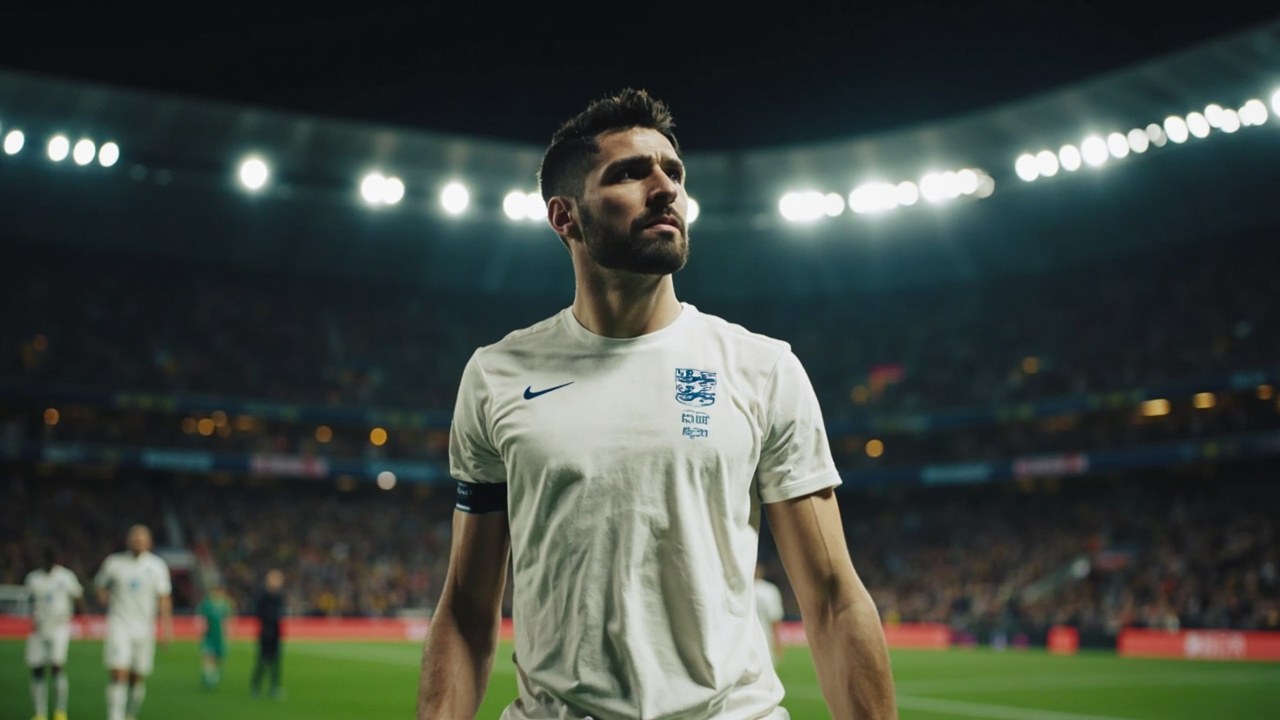

The phone call that used to be the story
There was a time, and it does not feel that long ago, when the headline was the phone call. Tuchel, or whoever was sitting in the England dugout that month, would ring Djed Spence, and Spurs fans would behave as if a national treasure had been excavated. We wrote about it. We wrote about it at length. We wrote about it more than once, more than twice, and I am not remotely embarrassed about that, because the alternative was silence, and silence is how you lose a player.
That phase is over. The phone call is not the story any more. The pattern is the story. Spence has now collected nine caps, and I have lost count of the number of times I have written the words "and the FA have stopped pretending", because at some point the pretense did stop, and we all carried on writing the column anyway out of habit. Habit, it turns out, is how you document a slow institutional surrender.
The ninth cap came in October, on a damp evening, in a fixture that nobody outside Merseyside was particularly watching, and the only reason we are writing about it is that the alternative is letting the moment pass unmarked. We do not let moments pass unmarked. That has been the entire thesis of this site for the better part of two years.
Why the question has changed, and why that is the point
The old question was simple. Should Djed Spence be in the England squad? Yes, obviously, and we said so, and we said so, and we said so, and the FA eventually agreed, and then we said it some more because that is what we do. That argument is now closed. It has been closed for at least three caps. The FA do not summon players they are not convinced by nine times. The selection meetings are short and the inboxes are full, and the only reason a full back keeps getting tapped is because the alternative is to admit they were wrong, and the FA would rather keep tapping.
The new question, the one we are stuck with now, is uglier. It is this: what does it say about Tottenham Hotspur Football Club that we had to wait for England to tell us what we had? Not "tell us he was good". We knew he was good. Tell us he was good officially, in a way that forced a paragraph in the national press and a mention on the BBC highlights and, crucially, a seat at the top table of the squad. Tell us in a language that the marketing department understands.
That is the question I am not going to drop, because it is the only one left. We have the caps. We have the performances. We have the receipts from two years of me writing the same sentence with different numbers in it. What we do not have, and what we may never have, is an honest accounting of why the club was so slow to see what the country saw in roughly the time it takes to play a Championship game.
De Zerbi, to give him his due, has never been part of the problem. The minute the Italian was allowed to pick the team, Spence was in the team. The minute Spence was in the team, he stayed in the team. The argument was always with the structure above the dugout, and De Zerbi cut through it the way he cuts through most things, which is to say without ceremony and without looking back. There is a lesson in there somewhere, and the lesson is that the people who run clubs are not always the people who know most about football. They are the people who know most about phone calls to agents.
Nine is a number, but it is also an indictment
Let us do the maths, because Spurs fans love doing the maths when the maths are on our side. Nine caps. Roughly two years of international involvement. Across that period, Spence has played, at a conservative count, something close to a hundred senior matches for club and country, and the only serious criticism anyone has managed to land on him in the last eighteen months is that he sometimes crosses with the wrong foot, which is the kind of complaint you only hear from people who have run out of real complaints.
Compare that to the discourse around other full backs in the league, the ones who get paragraphs written about their hair product and their holidays and the way they hold a fork at a charity dinner, and you start to see the shape of the problem. Spence has been discussed, throughout his rise, almost exclusively in terms of his story. Where he came from. Which academy released him. Which lower division team gave him a chance. The words "journey" and "route" and "non-league" have followed him around like a Sky Sports graphic that nobody can turn off, and at no point in the last two years has the discourse caught up with the football.
The football, for the record, is this: he defends with his head up, he attacks with the outside of his boot, he is comfortable receiving under pressure, he does not go missing in the big games, and he is the only full back in the league who can play both sides at the level required for a team with top-four pretensions. He has been doing this in plain sight. We have been writing about it. The FA eventually agreed. The only institution that has not quite caught up is the one that pays him, and that is the question I am not letting go of.
England keep picking him because England keep winning, and England keep winning because the full back position is no longer a problem, and the full back position is no longer a problem because a player who was told, repeatedly, by people paid to know better, that he was not good enough, turned out to be exactly good enough. There is a column in that sentence on its own, and I have written that column, and I will write it again if I have to.
The marketing department and the slow learner
What I want, and what I think most of us want at this point, is not another cap. Caps are nice. Caps are lovely. I will be celebrating the tenth when it comes. What I want is for Tottenham to behave, publicly and on the record, as if they have noticed. Not a whisper. Not a slick social media post at 11pm on a Tuesday with a slow-motion clip and a single emoji. An acknowledgement that this is a player the club developed, that the club nearly lost, that the club was lucky to keep, and that the club is now, finally, building around.
I am not holding my breath. The club does not do on-the-record. The club does institutional. The club does a quiet reshuffle in the back office and a third kit launch and a sponsorship extension and a partnership with a cryptocurrency firm that none of us have heard of, and it does all of that with the kind of energy that should be reserved for telling the world that one of its own has just played his way into a World Cup squad. The marketing budget for the launch of the third kit was, I am told, larger than the marketing budget for the entire rise of Djed Spence. Make of that what you will.
And yet. And yet. The phone keeps ringing. The phone will keep ringing. Tuchel, or whoever, looks down the bench, looks at the alternatives, and picks up the phone to Hotspur Way, and that is, in the end, the only review process that matters. Forget the fanzines. Forget the podcasts. Forget this site. The most powerful review process in English football is the one conducted by the opposition analysts, and the opposition analysts, week after week, have been telling the FA what we have been telling everyone else, and the FA, eventually, have been listening.
So here is to the ninth cap. Here is to the one we are not going to mark with a full editorial, because the editor (me) has run out of new ways to say the same thing, and that, more than any number, is the proof that the argument has been won. The argument has been won because there is nothing left to say. The argument has been won because even I, a man who has built a small personal brand on never shutting up about Djed Spence, am running out of fresh angles on Djed Spence, and that is the most Spurs thing that has ever happened.
What we do now
We keep going. We go to away days and we sing the song and we do not, under any circumstances, let the club forget that the only reason we are writing about a full back in October 2026 is that someone, somewhere, in a position of authority, decided that a player this good did not deserve a minute of his time. The minute he got, he took. The minutes after that, he took. The caps after that, he took. The only thing he has not yet taken is a trophy, and that, as ever, is on the rest of us.
De Zerbi has built the team around him. The shape works. The team wins. The full back plays. The country calls. The argument is over, except it isn't, because the argument was never really about football. The argument was about who gets to decide. And the answer, finally, in the cold light of the ninth cap, is the same answer it has always been: the people who watch the games, not the people who run the club, not the people who run the country, not the people who run the websites that try to convince you the metrics tell a different story. The people who watch the games. That is us. It has always been us. It will always be us.
Carter-Vickers got the nod in 2016 and we wrote about it. Spence gets the nod in 2026 and we are still writing about it. The difference is that in 2026 we are writing about it with a coffee and a smirk rather than a coffee and a prayer, and that, for the record, is progress.