CULTURE
De Zerbi Quietly Killed The Press Conference Cycle
He has done it by doing almost nothing. He has done it by answering fewer questions, more slowly, in shorter sentences, and with less of himself in the answer. The press room has spent six weeks trying to work out what is wrong with him. The truth, which we have suspected since the August international break, is that nothing is wrong. He has simply decided to stop feeding the machine, and the machine has not known what to do with itself since.
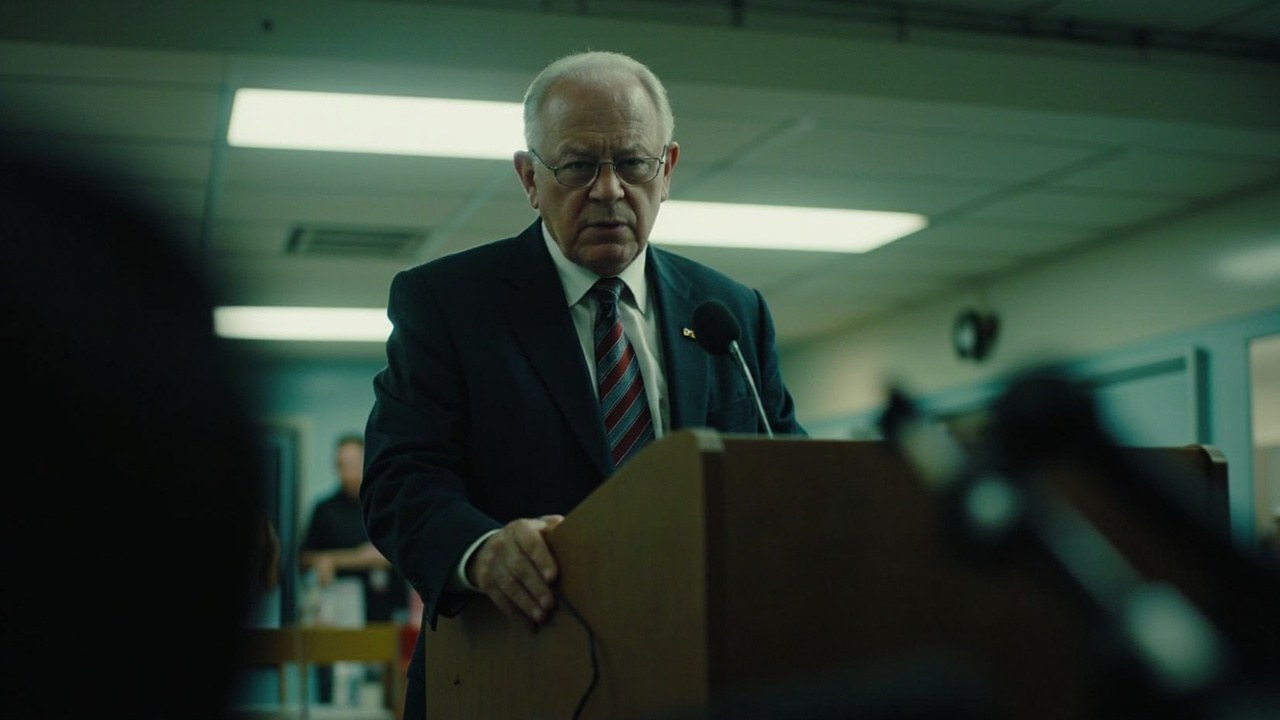

The question he will not answer, and why that is the answer
There is a question Roberto De Zerbi has been asked, in some form, after every match since the opening weekend. It is not a clever question. It is the same question every Premier League manager gets, only with our name bolted on the front. Are you happy with the squad? Do you need more? Is the board backing you in January? Have you spoken to Johan von Kranowitz? Is your relationship with the chairman intact? Do you feel supported?
He has not answered it once in October. Not because he is dodging. Because he has decided, visibly, that the question is not a question. It is a fishing expedition dressed as a question, and he has declined the costume.
That is the change. For two managers before him, that question was the door you walked through to get the rest of the interview. You answered it, you qualified it, you said something about the club's ambition, and then the room had you. They had a sentence. They had a narrative. By the time the press officer called time, there was a paragraph written in three different newsrooms and a transfer story on the desk for the morning. The question was the gift. The answer was the trap. Everyone knew it, and we all walked into it anyway, twice a week, for years.
De Zerbi has stopped walking into it. He has not announced this. He has not given a press conference about the press conference. He has simply started to leave gaps.
The first gap came after the home win over Brentford. A journalist asked, in that familiar throat-clearing way, whether the manager was "frustrated by the lack of movement in the window." De Zerbi said: "I have spoken about this. The next question." And the next question came, and he answered it, and the press officer called time, and the back pages had nothing. There was no quote. There was no row. There was a small silence in the room, and then everyone went home.
That silence is the story.
What a press conference used to be, around here
We have to remember what we had before. Press conferences at this club, for the best part of a decade, were not briefings. They were not updates. They were not even, mostly, press conferences. They were set pieces. A question would be asked, in a form designed to invite a specific kind of answer, and the answer would come, in the form the questioner had pre-written in their head, and the headline would arrive before the car had left the car park. The whole thing took about eleven minutes and produced four stories and one argument.
I am not blaming the press for this. They are doing their job. The job is to find the crack and pour a question into it. The job is to write the headline their editor wants before the editor asks for it. The job is to get a quote they can use, even if the quote has to be squeezed out of someone who did not want to give it. None of that is a scandal. It is the job.
The problem is that we, as a club, kept giving them the material.
Thomas Frank was, in his own way, very good at this. He was not combative, which people mistook for being unguarded. He would answer honestly, with feeling, in long sentences, and the longer he spoke, the more there was to clip. The journalists would leave with a sentence, and the sentence would become a front page, and the front page would become a question in the next conference, and the next conference would produce another sentence, and we would spend the international break arguing about a thing he had said, in passing, on a Tuesday afternoon, about a player who was not even in the squad. The cycle was beautifully engineered. The only problem with the cycle is that it was, in the end, the entire product. We were a club that generated copy, not a club that played football.
De Zerbi has, without anyone quite noticing, broken the cycle.
He does not give you a sentence. He does not give you a paragraph. He gives you a line, and then he moves on, and the line is not always printable because it is about shape, not about feeling. After the Carabao Cup win over Birmingham he was asked, in the modern way, whether he was "proud of the young players." He said: "They trained well. I picked them because they trained well. The next question." The young players, several of whom had played the best football of their lives, got two sentences. The journalist, who had wanted a think-piece, got nothing.
There was no row. There was no front page. There was a small piece on page 47 of the print edition of a tabloid, written by a freelancer, saying that De Zerbi was "notably terse." That was the whole story. The story was that there was no story.
The shape of the silence, and what it tells us about the dressing room
It is easy to read a press conference as a window into the dressing room. It is, in fact, mostly a window into the press conference. But over six weeks, when the same manager says the same kind of nothing in the same kind of way, you start to read it as a signal. The signal, in this case, is that the dressing room does not need the press conference to function. There is a different channel now. There has been for a while.
You can see it on the pitch. The shape of the team, the way the press stays high after a goal, the way the captain rolls his eyes at the fourth official instead of at his own centre back, the way Spence jogs back into position with his head down after a misplaced pass, the way Joao Pedro points to where he wants the ball, not where he wants the applause. None of this is new. All of it is, suddenly, louder.
It is louder because the manager is no longer saying it for them. The press conference used to be the place where the manager told the dressing room, on the record, that the dressing room was fine. The press conference used to be the place where the manager told the fans, in code, that the dressing room was fine. The press conference used to be the place where the manager told the room, full stop, that there was a story, even if the story was that there was no story.
De Zerbi has stopped telling the room anything. He has started telling the players everything, and the players have started telling us, in their play, what they have been told. We are reading the dressing room off the pitch now, not off the back pages. That is the change. That is the whole change.
It is also, I should say, a slightly unnerving change. As fans, we have been trained to want the press conference. We have been trained to want the line, the row, the front page, the apology, the clarification, the second clarification. We have been trained to want the drama. We are Spurs. We have always wanted the drama. To be told, gently, that the drama has been moved off-stage, and that the football is now the only thing on-stage, is a small culture shock. It is the right shock. It is the shock we have needed for a decade.
Why nobody is writing about this, which is the proof it is working
The proof that the strategy is working is that nobody is writing about the strategy. The proof that the press conference has been killed is that the press conference is no longer interesting enough to write about. I checked the back pages this morning, as I do, in the manner of a man who has not yet accepted that he does not need to. There was no De Zerbi story. There was a Thiago Motta story, an Arne Slot story, a vaguely sourced story about a centre back at a Championship club who is six foot four and might, one day, be of interest. There was no De Zerbi story. There has not been a De Zerbi story, in the sense of a story generated by a press conference, since the Brighton draw in mid-September, when he was asked about Spence's latest cap and said: "He deserves it. He trains well. I am happy. The next question." That was the last row. That was the last row because there was nothing in it to row about.
This is what the room was supposed to look like, all along. A manager who treats the press conference as a tactical broadcast. A manager who gives you shape, not feeling. A manager who gives you the line, the formation, the press trigger, the reason a substitution was made at the hour mark, and who treats the question about the chairman's mood as the noise it has always been. We have been told, by every serious manager in Europe, that this is the correct posture. We have been told it for years. We have never, in my adult lifetime, had it at this club. It feels strange. It feels like someone has finally taken the battery out of the toy.
It will not last. The room will catch up. Someone, eventually, will write the think-piece about how De Zerbi is "distant." Someone, eventually, will find the angle. Someone, eventually, will ask a question that he answers in a way that becomes a sentence, and the sentence will become a paragraph, and the paragraph will become a front page, and we will be back in the cycle. That is the job. That is always the job.
But for now, in October 2026, we have a manager who has decided that his job is to manage the team, and that the press conference is the bit of the job where he confirms the management of the team, and that is the end of it. We have a manager who has stopped giving the room the thing the room wanted. We have a manager who has, by doing almost nothing, killed the cycle.
It is the most important thing that has happened at this club off the pitch in five years. Nobody is writing about it. That is the proof.